
Clean Surfaces Ready for Final Finishes
Drywall Installation in poulsbo and around kitsap county for renovations, remodeling projects, and new interior construction
New drywall creates smooth, uniform wall and ceiling surfaces that serve as the foundation for paint, texture, or wallpaper application, transforming framed rooms into finished living spaces. Properly hung and finished drywall eliminates visible seams, fastener dimples, and corner imperfections that would otherwise telegraph through final finishes, creating a professional appearance that lasts as long as the paint or covering applied over it. Skylight Roofing and Construction installs drywall during whole-home remodels, room additions, basement finishing projects, and repairs that require full-panel replacement rather than patching across Bainbridge Island.
Installation begins with measuring and cutting panels to minimize seams, hanging sheets with fasteners spaced to prevent sagging or movement, and applying joint compound in multiple coats over taped seams and screw heads. Each coat is sanded smooth before the next layer is applied, with corners reinforced using metal or paper-faced corner bead that creates crisp, durable edges. Hanging drywall on ceilings requires temporary bracing to hold panels in position while fasteners are driven, and thickness is selected based on span between framing members and whether the surface will support heavy fixtures or need additional sound damping.
Schedule a consultation to review room dimensions, framing layout, and finishing timelines for your interior project.
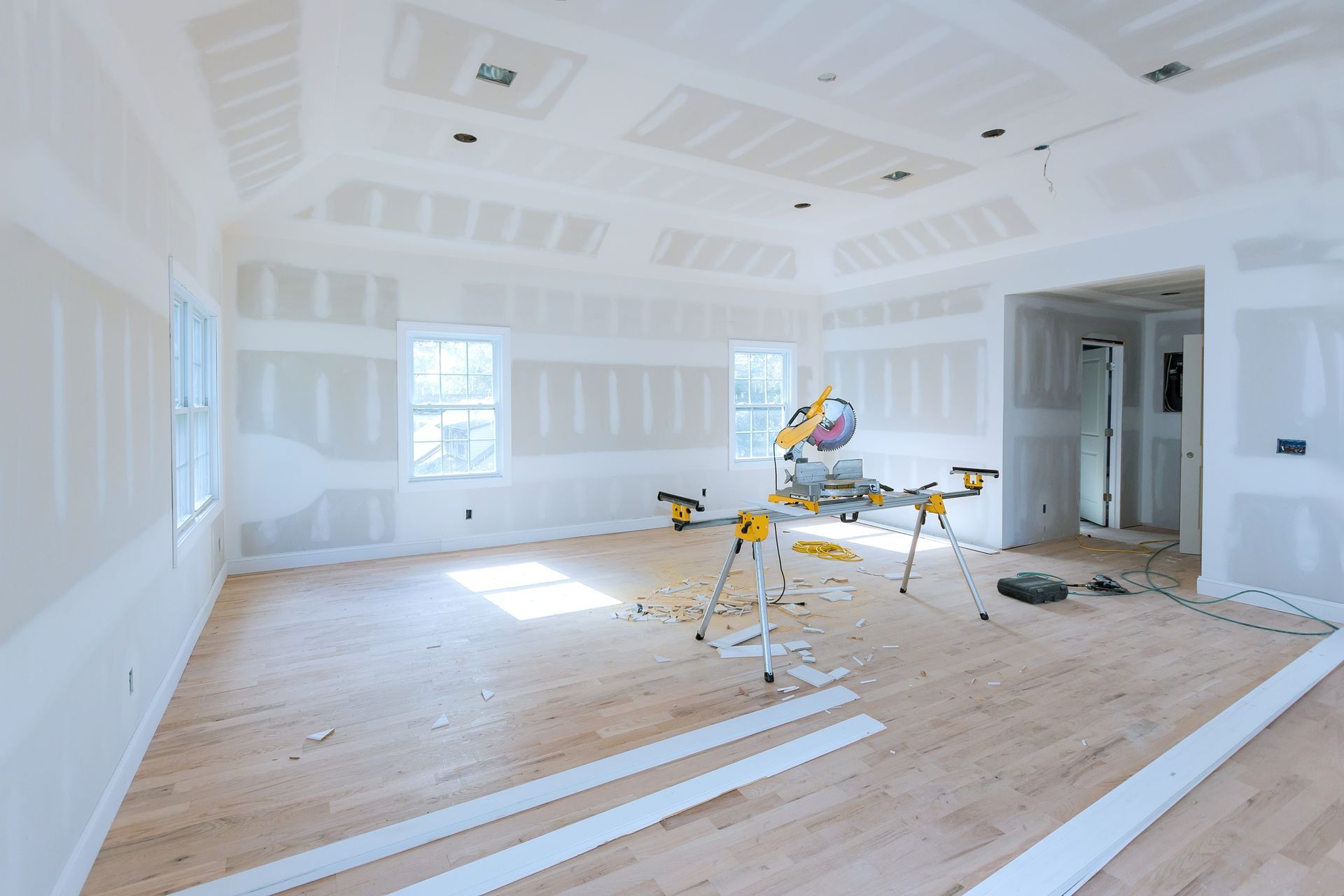
What Drywall Installation Actually Accomplishes
Hanging drywall involves positioning full sheets horizontally across wall studs or ceiling joists, staggering seams to avoid long continuous lines that are difficult to conceal, and fastening panels with screws driven just below the surface without breaking the paper face. Joint compound is applied over fiberglass mesh or paper tape at seams, feathered outward to create a gradual transition that disappears under paint, and fastener dimples are filled with compound and sanded flush. Texture may be applied after finishing if desired, or surfaces may be left smooth for paint application.
Once drywall is installed and finished, rooms have continuous, smooth surfaces that are ready for priming and painting, with no visible seams, ridges, or fastener marks interrupting the plane of the wall. Corners meet cleanly at ninety-degree angles, and ceiling surfaces remain flat without sagging or waviness. The finished drywall also contributes to fire resistance, sound dampening between rooms, and thermal separation when installed over insulated exterior walls.
Drywall installation is coordinated with electrical, plumbing, and HVAC rough-ins, since wiring and piping must be completed before panels are hung. Cutouts for outlets, switches, light fixtures, and vent registers are measured and cut precisely to avoid gaps that require excessive trim plate coverage. Moisture-resistant drywall is used in bathrooms, laundry rooms, and other areas where humidity levels rise regularly, reducing the risk of mold growth and paper face delamination over time.
Common Questions About This Service
Property owners typically ask about finishing techniques, drying times, and how drywall installation fits into the overall remodeling schedule.
What thickness of drywall is used for walls versus ceilings?
Walls typically use half-inch drywall, while ceilings often require five-eighths-inch panels to prevent sagging between joists spaced sixteen or twenty-four inches apart.
How many coats of joint compound are needed for a smooth finish?
Three coats are standard—one to embed the tape, a second to build up the seam, and a third to feather edges and fill any remaining imperfections before sanding.
When can drywall be painted after installation?
Joint compound must dry completely between coats, and final sanding should be followed by at least twenty-four hours of drying before priming, though humid conditions in Bainbridge Island can extend drying times.
How are corners finished to remain straight and durable?
Metal or paper-faced corner bead is installed along outside corners and coated with joint compound, creating a rigid edge that resists denting and maintains a crisp line.
What happens if drywall is installed before rough-ins are complete?
Panels must be cut or removed to access wiring, plumbing, or ductwork, creating additional seams and joints that require more finishing work and may compromise the final appearance.
Skylight Roofing and Construction coordinates drywall installation with other trades to maintain project timelines and delivers finished surfaces that meet the standards expected in residential remodeling and construction. Arrange a project review to discuss your interior finishing needs and timeline.